AI and the labor market: revolution or threat?
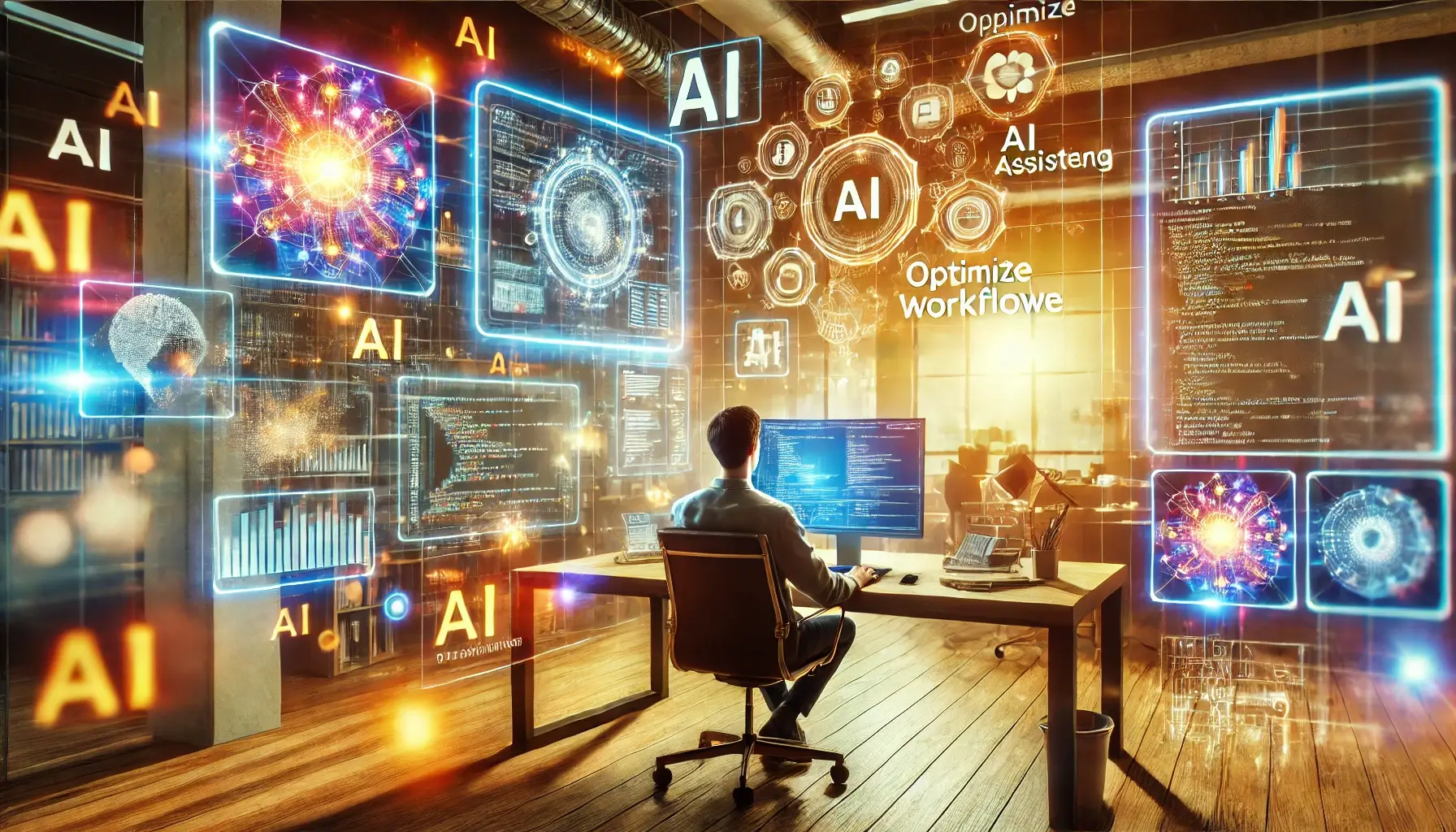
What and Why
Artificial intelligence – a topic that’s everywhere, from the news to casual coffee conversations. Some see it as salvation, others as a harbinger of job market doom. Not long ago, I was terrified. I used it (and still do!) eagerly, but I was afraid. Am I still scared? You’ll find out at the end of this article. 🙂 I decided to take a closer look at the topic and see what AI really means for the professional future of many of us.
Will Robots Take Our Jobs?
This question comes up regularly, and I’m not surprised. Every major technological shift triggers such concerns. It was the same with industrialization and factory automation. And what happened? Not everyone ended up unemployed, but the job market changed – and the same is happening now.
AI excels at routine tasks: data analysis, process automation, and even text generation (yes, this post is the result of collaboration between me and my digital assistant! 🙂 ). This means that some jobs will disappear, but at the same time, new ones will emerge – ones that require working with AI rather than competing against it.
Which Jobs Are at Risk?
Let’s be honest – if your job mainly involves repetitive tasks, you might have a problem. AI is already taking over:
- customer service (chatbots and voice assistants),
- document analysis (e.g., in banking or law),
- some aspects of programming (auto-generating code, testing),
- basic medical diagnostics.
But… does this mean the end of these professions? Not necessarily. Rather, they will evolve. For instance, lawyers will still be needed, but they’ll use AI to search case files and analyze precedents instead of doing it manually.
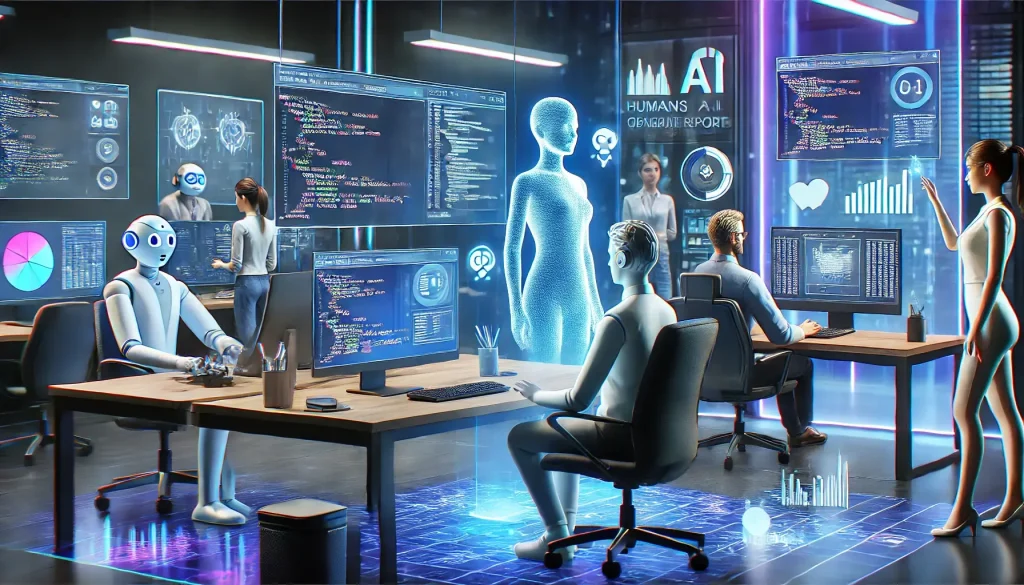
Opportunities and New Possibilities
AI doesn’t just take – it also gives! It opens doors to new specializations, such as:
- Prompt engineering – the art of crafting AI prompts to get the best results.
- AI ethics & governance – working on regulations and ethical AI usage.
- AI integration in business – companies need specialists to implement AI effectively in their processes.
- AI development and optimization – algorithms won’t create themselves, and people will still be needed to oversee and refine them.
Every day, I use AI-powered tools that not only speed up my work but also open new opportunities. I know that (for now) AI won’t replace creative thinking, problem-solving, or complex system design – on the contrary, it can be our assistant and support. That’s why I believe that instead of seeing AI as a threat, we should learn how to use it for our own benefit and professional growth.
How to Stay Relevant in the Job Market?
There’s no denying that AI development requires us to adapt. But instead of panicking, it’s better to think about how we can use AI to our advantage:
- Learn to work with AI – regardless of your industry, AI proficiency will become a must-have skill.
- Develop soft skills – creativity, critical thinking, and management – AI (for now) can’t master these.
- Rethink your career approach – flexibility and a willingness to learn new things are key in a world where technology evolves rapidly.
- Experiment – AI can help automate tedious processes, giving you more time for creative work. Don’t be afraid to test new solutions and learn on the go.
And Me?
After my initial fears, curiosity has now taken over. I chose a career that’s constantly evolving and “cutting-edge” for a reason. 🙂 I’m a curious person, I believe in progress and its benefits. In fact, I see it as essential for our survival!
Will AI take our jobs? Maybe not take them away, but rather change their nature. Some positions will disappear, others will evolve, and new ones will emerge. The key is adaptation – those who learn to collaborate with AI will have the upper hand.
And the classic question: How about you? Do you already use AI in your work, or do you still stick to traditional methods? Let me know in the comments!